Fireplace Information Blog
-
October 21, 2011
When fitting a chimney liner it is imperative that you use flexible chimney liner kits. Many chimneys are not straight, some often have a kink in them and because of this you need a liner that will adapt to the shape of the chimney. Inside the chimney you might find that the masonry is not straight and even, especially in older properties so again the flexibility to get round these problems is vital.
These liners come in a variety of widths, to suit any chimney stack, and they are either single or twin skinned. The single skin liners are only suitable for oil or gas heating systems, but the duel skinned is more versatile and can be used for those systems as well as multi-fuel, and solid fuel burning.
The basic liner kits available typically include: a top plate for the chimney; a rain cap; appliance connectors; chimney liner warranty; installation instructions and
-
October 21, 2011
When you have a new fireplace fitted one of the things you need to consider is how it will fit in with your present décor. You also need to have refractory panels fitted to the new fireplace. These days you can buy decorative fireplace refractory panels so you can satisfy both requirements at the same time.
There are two purposes for refractory panels. One is that they reflect the heat generated by the fire, back into the room for more effective heating and the other is that they prevent the heat from penetrating the firebox, which can cause a considerable amount of damage.
There are so many different designs of panel available that you can’t fail to find one that appeals to your taste. You can go for plain stone if you prefer a simple style, but other designs are available, such as herringbone, diamond and rib effects. There are also sandstone, briquette and brick
-
October 21, 2011
If you fancy the idea of having a wood burning stove but don’t have the room to put it or have a small fireplace, then an alternative you could consider could be a wood burning fireplace insert. The difference between them is that a wood burning stove is a stand-alone heating system which usually has a flue pipe attached and can stand anywhere. An ‘insert’, on the other hand, is a system which you can insert or slot into the original fireplace which then becomes your heating system.
The insert usually consists of a firebox, heat circulating blowers, a door and thermostatic controls. They also come with flashing and decoration. They are designed in numerous sizes so they are adaptable to any size fireplace and the flashing and decorations come in a wide variety to try and coordinate with your original décor as much as possible.
-
October 21, 2011
If you are looking to buy a chimney liner for your home you should be aware that there are different liners available, depending on whether you use multi-fuel heating or oil or gas heating. Both of these stainless steel chimney liners are used for lining masonry chimney stacks, the main difference being that the multi-fuel liner has a twin-skin construction whereas the oil/gas fuel liner has a single skin construction.
The multi-fuel liner is deeply corrugated on the outside skin but smooth on the inner core. This makes it easier for cleaning and there are no areas for the tar and soot to build up. This liner can be used for wood burning stoves, multi-fuel systems, open fires and can also be used for gas and oil appliances, making it a very versatile liner as you can change your heating system without worrying about changing the liner. This versatility does make it a little more expensive but you are
-
September 21, 2011
This is because the moisture created in wood burning fireplaces mixes with the creosote and this becomes a gas which rises out of the chimney. However – it really can't hurt and can benefit you in other ways.
Finally there's one more reason that insulation is a good idea for your chimney liner – and that's that having a hot fire and a cold chimney will cause down drafts. This is because air rises – meaning that the air pressure around your fire is lower. In other words there's a 'pocket' of air around your fire where much of the air has risen away, and if you don't have insulation for your liner, the cold air will rush in to fill this gap (this is the same process that causes wind – wherein the warm earth heated by the sun has the same effect as a fireplace).
If
-
September 21, 2011
Thus when it is cold it will get very cold and that will mean that it will attract condensation – which is a by-product of the burning of your fires (hence the term 'non condensing furnace'). This will attach onto your chimney liner and this is a serious problem as condensation is acidic and highly corrosive – meaning it would eat away at the liner and eventually completely deteriorate it.
Worse, if you get condensation on your chimney liner, then you will likely also get creosote on your liner and this is very danger as creosote is a dangerously flammable substance which can cause chimney fires. The colder your chimney is, the more creosote will stick to it, and the more creosote is on your chimney, the colder it will become.
However bear in mind that
-
September 21, 2011
However if you really want chimney liner that you can rely on then it is important to put a little extra work into it yourself, and specifically this means getting insulation for your chimney sweep liner.
But bearing in mind that the role of the chimney liner is essentially to provide insulation, why do you also need insulation for that itself? Well chimney sweep liner is actually a highly essential example of chimney supplies for several reasons.
First of all, if you have stainless steel chimney liners you might find that when the wind blows very heavily the liners rattle and shape and this can make an awful racket – in fact it will be enough to wake you up and it won't be particularly conducive to rest or relaxation which is what most of
-
September 21, 2011
You have several options in terms of the type of the material of the chimney liner, but the very best option is to go for stainless steel chimney liners. Other than stainless steel chimney liners, you also get aluminum chimney liners and ceramic chimney liners. The aluminum chimney liners and flexible and this allows you to install them yourself using chimney liner kits. However while this will save you money and upheaval in the short term, spending a bit more on stainless steel chimney liners is recommended as these will be the least likely to corrode or tear over time – which can be a big problem for aluminum chimney liners.
Stainless steel chimney liners will really protect your chimney
-
September 21, 2011
These chimney liners will fit inside of your chimney and it is up to you to make sure that they are fitted all the way along the inside to the top of the chimney and that they are well covered.
Chimney liners have many different purposes and are highly important chimney supplies. The purpose of this is to provide you with lining to contain the combustible products heading through your chimney and helping to encourage them to flow outside thereby making it safer. At the same time they are designed to protect the walls of your chimney from the heat and corrosion that would otherwise occur. They also prevent the smell of smoke and other fumes from lingering in your chimney and help to insulate the chimney itself and prevent too much cold air from getting in and altering the
-
September 21, 2011
Furthermore any chimney liner kits that are designed for your own home installation will of course save you money in other areas and most notably they will save you the costs associated with having the chimney installed or using chimney sweeps in order to let you know whether you need oval chimney liners or other shaped chimney liners. However in most cases note that round chimney liners will be the best fit and will work in the majority of cases.
Of course it still helps to know how much material you need, and if you are going to buy stainless steel chimney liners that you can't install yourself then you will still need to get estimates regarding how much you need and how much the service will cost. In this case it's a good idea to get estimates from a few different chimney sweeps and then to take the average estimate as this will give you the
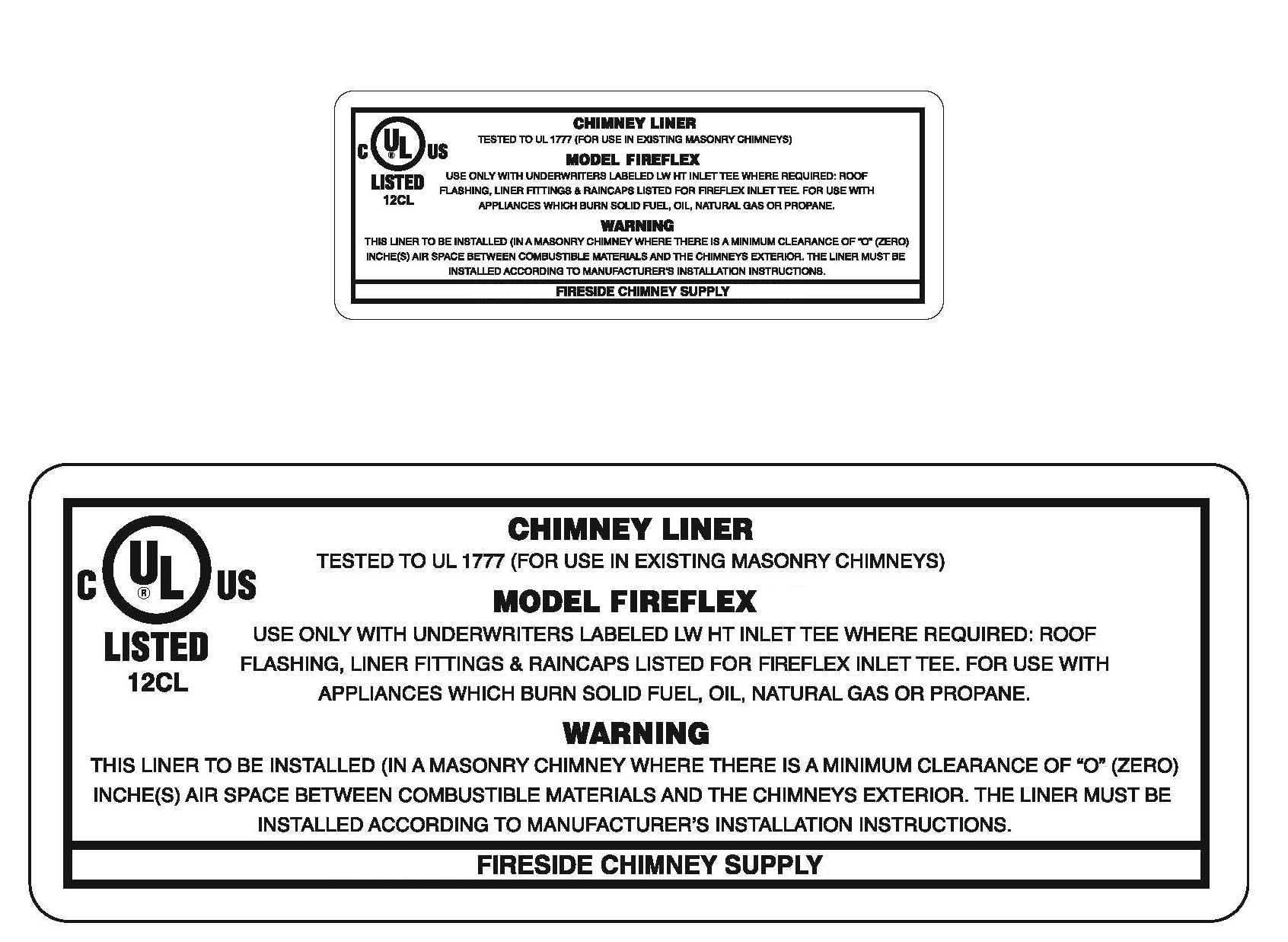
Others may claim their chimney liners are UL listed. We show you the proof.


Open Weekdays
Monday - Friday 9am - 5pm
Saturday Closed
Sunday Closed
1-877-486-8119