Fireplace Information Blog
-
May 27, 2011
A chimney liner is a material which covers the interior surface of your chimney. This is an essential part of the chimney as it ensures safety and efficiency. The chimney liner can be made out of a variety of materials such as clay, stainless steel or aluminum. The stainless steel chimney liners have some advantages which make them a very good choice.
For one, the stainless steel chimney liners are relatively cheap compared to other materials. They can be used to line any type of chimney, even the ones that didn’t have the steel chimney liners to begin with meaning that you don’t have to tear down your chimney to install them. Apart from that, the stainless steel chimney liners are much easier to clean compared to clay-lined or unlined chimneys, which lowers your cost of maintenance. They also happen to be very energy efficient, which would reduce your fuel consumption.
This
-
May 27, 2011
The fireplace is an area in your homes that experiences very high degrees of heat for long periods. Concrete is usually the material of choice used in its construction, and though this material has its merits as construction material, it is terribly susceptible to heat and gases produced during combustion. These tend to weaken it over time, and if not taken care of properly, it can lead to cracking or even collapse of your fireplace. To ensure this does not happen, it is extremely advisable that one lines the interior of the fireplace using a heat proof material.
A fireplace liner can be used to prevent or repair damage to the structural integrity of the fireplace. A proper size of liner should be used for the specific kind of fireplace you are using, and a fireplace professional should be consulted to determine the optimum size. It is also advisable to check local regulations concerning fireplace liner
-
May 27, 2011
A flue liner is an important component of any chimney due to its protective function and the fact that it contributes to the longevity of the chimney and any connected appliance. It also improves the safety profile of the chimney.
There are three vital reasons for having a flue liner. One is that the liner acts as a barrier against transfer of heat from the fireplace exhaust to the adjacent combustible structures in the house, such as wood scaffolding. An unlined chimney conducts this heat very well and causes ignition of adjacent combustibles in a short time. The liner also protects the chimney itself from corrosion by products of combustion. Gases in the flue (the space in the chimney) can penetrate and erode the brick and mortar making up the wall of the chimney, causing it to lose structural integrity. This also provides a conduit for the passage of toxic flue gases into the house.
-
May 27, 2011
A chimney liner is one component of a chimney whose importance cannot be overemphasized. This is because it prevents gases of combustion from leaking into your house, which could turn out to be a health hazard as the gases are toxic (carbon monoxide being a case in this point). Apart from this, some of the substances resulting from combustion of fuel are themselves combustible. An example is creosote, which can seep through the mortar of your chimney and collect in adjacent woodwork. Hence it can become a fire hazard.
One should therefore consider upgrading their chimney lining for safety’s sake. This is especially true if your chimney was built with no liner, or if it has a liner which is cracked or too large. One could contract a professional to do it or do it themselves, but the constant that shouldn’t be ignored is to use quality products, preferably liners made of stainless steel. These can be bought
-
April 30, 2011
A smooth wall stainless steel chimney liner is the latest technology in this wide chimney industry. It combines the advantages of both the improved performance of a rigid chimney liner and flexible chimney liner. This stainless steel liner has a double wall construction which takes advantage of the highest technology involved in making 316 version of stainless steel. The liner is more flexible than any other and offers the best performance you can think of.
A smooth wall stainless steel chimney liner is the most efficient venting because of the decreased turbulence. The liner can be shaped into square, oval and rectangle to take advantage of each cubic inch and more so, offer maximum draft. The stainless steel chimney kit includes cap, collar, tee, top plate, stainless screws and clamp. If your chimney is that straight from top to bottom then this kit is perhaps the perfect one. While taking advantage of the high quality smooth wall interiors, the liner itself will last forever and is easier to clean. Insulation will be required for the solid fuels although this may be optional for gas and oil. The smooth wall will have a smooth flexible interior wall while the exterior is corrugated. There are therefore no sizing restrictions in case of oil and gas applications.
-
April 30, 2011
There are a number of shaped chimney liners which can include oval, square, rectangle, round and custom liners. Every sweep estimate for each chimney may be different and the common of the above list are the round and oval shaped chimney liners which turn out to be economical as well.
The stainless oval chimney liners are both water and air tight. Sometimes, the flue liner may have up to seven ply seams which are rated best for their strength. The stainless material used to make them is also at its best. Coming in different sizes, the oval liners are priced per foot. If you chose an oval shaped chimney liner, you will need the top plates as well. The top plates work well if one has clay tile at the top of the chimney. The plates have oval design to fit the oval shaped chimney. It is quick to install as most of the plates come with a quick to connect system. One just needs to tighten down the screws to
-
April 30, 2011
Oval chimney liners are categorized under single wall liners which are flexible, economical and strong. The single liners with round and oval cross sections also come in a variety of stainless steel grades. The oval shape is known to offer a larger cross section especially when it is installed in rectangular enclosures. When installing a wood stove in your fireplace there are ways you can get past the damper housing with this chimney liner.
One can convert from the round to the oval liner at the damper housing. Here, you should go through this damper housing with the oval liner and later convert it back to round while at the stove. This method is costly as the oval pipe plus the adaptors are expensive. It also may bring problems during the cleaning of the chimney. The preferred method is by cutting the damper housing where one will keep the same diameter liner from his stove to the top of his chimney. In this method, cleaning will be done swiftly
-
April 30, 2011
Older homes often need rigid chimney liners to make them more efficient and safer. Unlined chimneys are vulnerable to creosote, acidic gases and the risk of chimney fires which weaken both the mortar and the brick. To own the right chimney liner, it will depend on the kind of chimney one has. The rigid stainless steel chimney liners do provide uninterrupted and smooth surfaces that creosote cannot cling to. These liners are inexpensive to install and fit older unlined chimneys. Being multipurpose, the steel liners are good for oil, wood and gas appliances. They are faster to install than clay liners.
Aluminum chimney liners work well to retrofit homes for the gas appliances. They are rigid liners but lighter in weight than stainless steel, and are cheaper. However, they cannot hold up to the combustion byproducts of oil burners. Clay tile is the oldest form of chimney liners. When installed correctly,
-
April 30, 2011
There is a special fire clay that is used to make the refractory panels. Once the mixture is formed out of the raw material it is poured into forms, and then cured for a certain period of time before being installed into the fireplace. The refractory panels act as protection to the sheet metal so as not to get damaged while burning fire. The following are instructions on how to install your panels.
Since installation itself is dirty work, one should spread out a tarp in front of the fireplace and out into the room. Then, one should remove the grill to clean the fireplace. The grill should be cleaned outside the fireplace using a brush. Then he should scrape out all the ash from the fire place before scrubbing the floor of the fireplace with soap and water. Locate panel clamps to hold the panels in place. Each clamp contains four to six screws and they run the length of each panel along the perimeter
-
April 30, 2011
Also known as chase tops, chase covers are metal coverings that are designed to keep rain, animals and snows from entering a home through the chimney’s opening. They cover the entire top of your chimney because they are designed to fit around the round metal chimney. In fact, they fit well over the chimney just like the shoe box lids. It is necessary to buy a chase cover because your family will be protected from harmful animals and diseases, and also your chimney will be in good shape for a longer time duration. There are different materials used in making the chimney chase covers as described below.
The galvanized steel is the lowest in terms of cost although it is known to rust quickly and may need shorter periods of time to be replaced. One is advised to have an alternative cover.
Aluminum does not rust but it is considered to be too soft for its purpose. It is
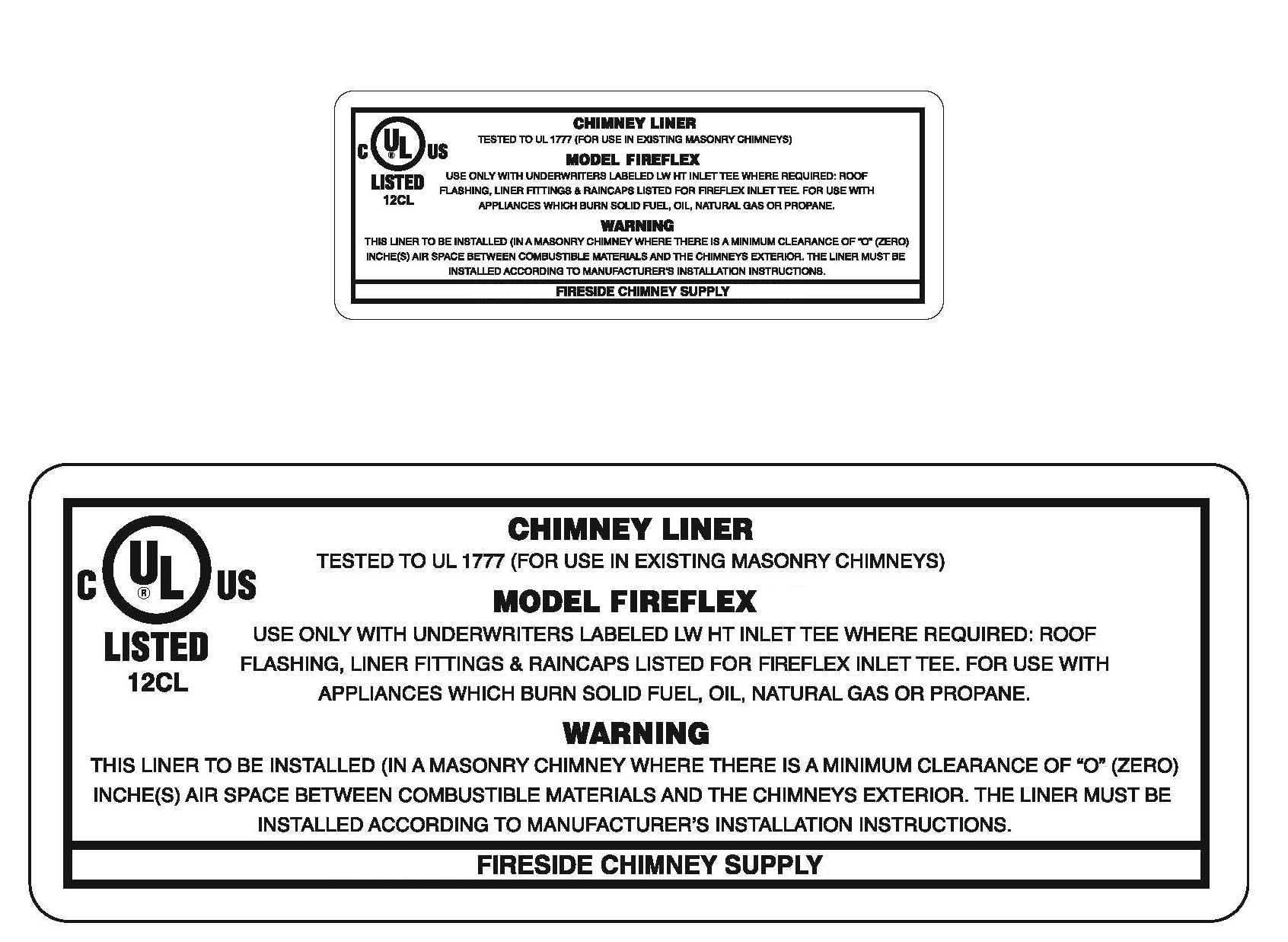
Others may claim their chimney liners are UL listed. We show you the proof.


Open Weekdays
Monday - Friday 9am - 5pm
Saturday Closed
Sunday Closed
1-877-486-8119