Blog
-
July 26, 2021
You made the decision to shop around and buy a new chimney liner kit online. First of all, congratulations for making a great first move! You're on your way to a safer and more efficient chimney system. Now, what? When it arrives, you actually need to install it! There are some things you can do to prepare for installing your new chimney liner which will make the process easier and less expensive than it would otherwise be. This isn't about actually installing the liner, but what to do beforehand. Here's everything you need to know:
Step #1 Take careful measurements to be sure you are getting the right size liner for your chimney. The liner should reach from the top of your chimney to the damper throat or other connection at the bottom of your flue. As well,
-
June 21, 2021
Not all fires burn the same! Did you know that different wood produces different fires and different smoke as well? So, is there a right choice and a wrong choice? Yes and no. Essentially, what you're looking for is driest, best seasoned wood you can get.
Dry wood will burn more completely than "green" wood. This will result in a hotter fire with less smoke. That's great because you don't want a bunch of smoke in your house. Beyond your lungs, it's also better for the fireplace and chimney itself. An extra-smoky fire that comes from using unseasoned wood will make more creosote build up in your chimney liner. This nasty build up is what makes it necessary to clean your flue. This creosote is highly combustible, and it also constricts the flow of gases up your chimney liner, resulting in decreased draft and dirtier subsequent fires. The more creosote, the more often you have to clean- it's as simple as that.
-
June 21, 2021
We all want to be as energy-efficient as possible. For some people, they want to lower their eco footprint and use as few fossil fuels as possible. Others simply want to save money and recognize that "going green" is a good way to do it. After all, if you're like most people your monthly electric fee is one of your most costly bills to pay. No matter which category you fall into and why, we recommend you look at a place you may not have thought of- your chimney. Yes, your chimney could be hindering your efforts to make your home more energy efficient.
Most houses have a standard fireplace that vents up a brick and mortar masonry chimney. As you roast marshmallows for s'mores or cozy up with a glass of wine next to a roaring fire, you don't know that your fireplace is an air polluting energy hog. Oh no! In fact, your wood burning fireplace vents not just smoke but other pollutants out the chimney. While this is happening, it is also sucking cold
-
June 21, 2021
Unless you live way out away from any city, you're probably concerned with air pollution. Traffic, factories, dust, pollen, mold spores, wildfires and even distant volcanoes all contribute to pollution in our air. Did you know that you could be contributing too? You aren't driving a massive diesel truck, but that doesn't mean you're eco-friendly. In fact, you may be contributing to air pollution every time you make a fire in your living room fireplace.
The harsh truth is that home fireplaces are a factor in air pollution. Smoke forms when wood or other organic matter burns. The smoke from wood burning is made up of a complex mixture of gases and fine particles. In addition to particle pollution, wood smoke contains several toxic air pollutants including benzene, formaldehyde, acrolein, and polycyclic aromatic hydrocarbons (PAHs). It's not all bad news, though. The more efficiently you burn wood, the less smoke is created. This is where Fireside
-
June 21, 2021
We all want our cars to perform well and get us safely where we need to go. Guess what- we also need performance and safety from our chimney system! While you may not think about it very often, this is incredibly important for those living in a home with a fireplace.
How could a chimney have performance? Isn't it just a tube of bricks with a hole through the middle that carries smoke out of your house? No way! It is far more complicated than this. The brick exterior of your chimney that you can see from the outside of your home is only a small part. It is actually a complete system with several parts and pieces, all working together to keep your family safe and your house warm.
If you don’t give their chimneys much thought, you're not alone. Let's make today the day that changes! There are things you can do to improve the performance of your chimney system. The even better news is that
-
May 20, 2021
Your chimney damper is located in the flue. Dampers are placed inside of the flue to help control ventilation. It keeps cold air out when a fire is not going. That's not all they do, though. Dampers also send the smoke away. Imagine your home filling up with smoke every time you light a fire! That's not all. Chimney dampers also control the intensity of your fire. As your damper is adjusted more or less oxygen flows through your fire. This allows you to make the flames as intense or subdued as you’d like. Clearly, it's really important to know whether your damper is open or closed. You don't want to start a fire with your damper closed! Here are four ways to know whether your damper is open or closed.
#1 Visually inspect it.
Performing a quick visual inspection is the best
-
May 20, 2021
If you have questions regarding your chimney and fireside, you're certainly not alone. We are here to help you answer whatever inquiries you have! We often get questions regarding chimney liners and whether they need to be insulated or not. In order to best answer that, let's first discuss the liner itself. The primary purpose of a liner is to funnel hot gases out of your home into the outside air. This is done through the chimney stack. The liner works under negative pressure created between the difference in temperature to ensure that the harmful gases are drawn vertically up the flue system into the atmosphere. Having a stainless steel chimney liner is an incredibly important part of the fuel-burning process. This creates an even and constant flow of heat to release back into the room, while sending hot gases out of your home.
-
May 20, 2021
Did you know that your fireplace and chimney have several unique and important parts to it? It isn't just a big tube going up out of the roof! There are several different pieces that are in place in order to ensure you and your family are safe and healthy. Anything that has to do with fire and smoke is worth knowing about to ensure the system is working properly. This includes understanding the chimney cap and fireplace damper and the difference between the two.
What is a damper?
First, let's talk about the flue. The flue is where the smoke escapes when the fire is burning in your fireplace. The damper is located in this flue. Dampers
-
May 20, 2021
Installing a stainless steel chimney liner is an easy and economical way to repair a deteriorated, old, or inefficient chimney flue. Our rigid lining systems are constructed of high grade, 24 gauge, seam welded, stainless steel. They are available in 304 for wood burning and 316 alloy for all fuel applications. The smooth interior of the pipe allows for better draft and less creosote build up. This is what you need.
Once you buy a rigid chimney liner kit online through Fireside Chimney, it will be delivered soon. Then, you'll need to install it. Is this difficult to do? Not at all! In fact, it can be done in ten steps.
Step #1 Get your tools. You'll need a razor knife, flat head screwdriver, caulk gun, a pair of working
-
April 30, 2021
Your chimney is a lot more complex than just a chute going through your ceiling and out the roof. There are several parts that all need to be in working order. One of these is your chimney damper. If it's working the way it should be, it actually saves you money. This is something all homeowners like to hear!
What is a Chimney Damper?
Essentially, they let you control how much air is coming in and out. It's important for a few different reasons. Dampers are made to seal the chimney when fires aren't burning in your fireplace. You close the damper so that the cold air stays out and your home stays warm. Otherwise, your nice toasty air would be going out a big hole in your roof and all that frigid winter air would be coming in! Dampers also send smoke away. Before your fire gets going, be sure to open the damper, so that all of the smoke escapes through the chimney. Thirdly, chimney dampers help control the intensity of
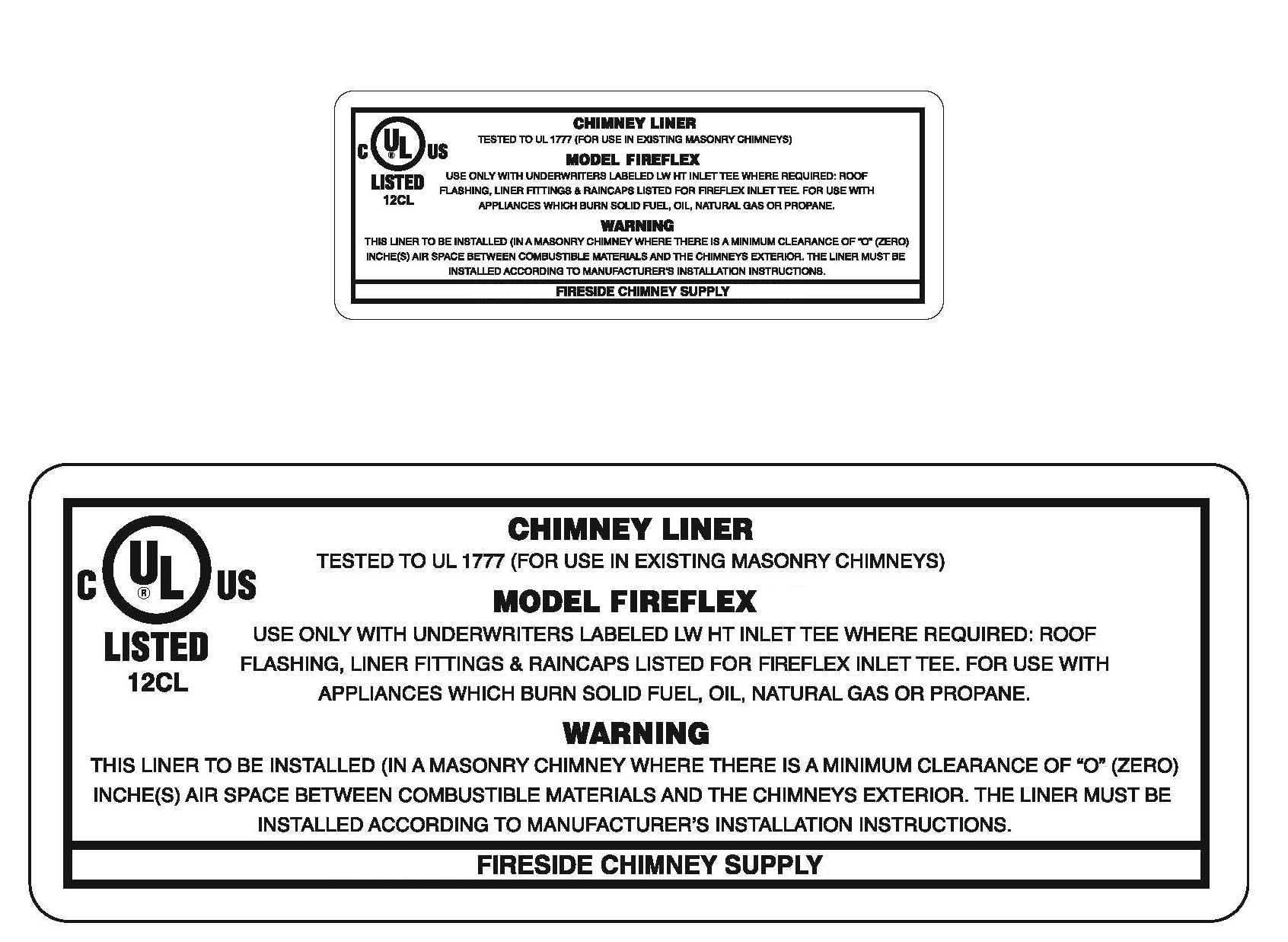
Others may claim their chimney liners are UL listed. We show you the proof.


Open Weekdays
Monday - Friday 9am - 5pm
Saturday Closed
Sunday Closed
1-877-486-8119