Blog
-
April 30, 2021
Many older homes have maintenance needs that newer homes don't. This includes the chimney. If you live in a house that was built before the 1940′s, your chimney was probably built without a clay tile liner. Newer homes are typically built with prefabricated metal chimneys rather than with traditional brick and mortar ones. Even though your chimney is older and different, it is critical that the flue not have any damage that could allow your chimney to leak.
What is the flue?
The flu is the opening running up the inside of the chimney that carries smoke and combustion gases out of the building. It's no wonder this is so important!
How do I know if there is a problem?
If an inspection by a qualified chimney professional reveals problems, you may need to have a new chimney liner installed. In old unlined chimneys, missing or cracked bricks
-
April 30, 2021
When it's frigid cold outside, your home is nice and toasty. This makes it very comfortable for you and your family, and makes all the little critters in your neighborhood pretty jealous. They'd love a spot to get out of the cold. If your chimney doesn't have the necessary parts to seal up tight, they can!
How do Animals get in?
Racoons, rats, mice, birds, and pests would love nothing more than to make a new home in your chimney. They can climb into your chimney easily if your chimney cap is missing or damaged.
The chimney cap sits at the top of the flue, covering and protecting the flue from both animals and the elements. The solid metal top of the chimney cap prevents water from getting in, during rain and snow. There are also mesh or wire sides that serve two purposes, letting smoke out and preventing animals from getting in.
-
March 30, 2021
Chimney caps are a very important chimney product because they actually serve several purposes. Putting a chimney rain cap on top of your chimney prohibits deterioration on the inside from the elements, including both snow and rain. Using a chimney cap, also known as spark arrestors, prevents hot sparks from escaping from the chimney and landing on an area that could cause a fire. This includes your roof, of course. Beyond these, chimney caps also keep birds, squirrels, rats, mice, bats and other animals from making a nest inside of your chimney or using the chimney as a gateway to enter your home. Wow, all of a sudden- it's pretty clear to see why you need to buy a chimney cap online!
As soon as you begin shopping, you'll realize that not all chimney caps are the same. You have options! A few of the
-
March 30, 2021
A chimney damper is a necessary accessory for homes with a chimney. It allows all of the smoke and soot to go out, without letting anything down the chimney itself. This means rainwater, pests, and more. A chimney damper is also a great device to close off your chimney flue and help keep heat and cooling in your home instead of leaving right up and out the chimney flue.
A chimney damper is a fairly simple device; it is used to close or partially close off the flue. When the damper is in the open position, it allows the smoke away to exit out. In the closed position, the damper helps prevent outside air from entering or your conditioned air from exiting the house. This will help to make your home more energy-efficient.
They are constructed of metal and can withstand the heat of the fire and still function properly without damage. They are controlled by a handle, pull chain, or latch. Once you
-
March 30, 2021
It's probably no surprise that chimneys get so dirty. Technically it isn't "dirt" per se, but actually creosote exposure. Creosote is that heavy sticky black substance that you see inside your chimney. When you burn wood in your fireplace, the unburned wood particles, tar, smoke, and other debris that goes out of your home through the chimney combines with water vapor to create creosote. If you have a chimney, you're going to have to clean it!
When your chimney is not cleaned for a long time, the creosote keeps building up in the flue during the use of the fireplace. This creosote is highly flammable and can lead to a dangerous chimney fire. Your chimney could actually catch on fire and burn uncontrollably! An unattended chimney can also gather a lot of ash and tar, which may eventually find its way back to your house. This mixture of ash and tar may cause severe breathing problems for you and your family.
-
February 24, 2021
A chimney liner is exactly what it sounds like, a lining that goes inside of your chimney. You might be wondering, “Why would I need to line my chimney with something, isn’t that what the chimney is made to do?” Most homes with a chimney were originally constructed with clay or ceramic liner. These are often used when a home is first built because they’re inexpensive and work well with a brand new fireplace and chimney. However, clay chimney liners are not the most durable and can crack and erode under extreme weather changes and conditions.
Do you really need a liner, though? Yes! A chimney liner might not seem like an important part of your chimney, but in reality, it’s extremely important and improves the safety of your fireplace and home. Additionally, a chimney liner is often required to be present to pass inspection to sell your home. It isn't just a rule; there are many benefits to installing a chimney liner. Just a few of these include:
-
February 01, 2017
A flue liner has to be able to stand up to the stresses and strains of being pulled and pushed down a chimney. It also needs to be impervious to continuous high temperatures and bursts of immense heat. The best brands will ensure that any moisture or tar that runs back down the liner goes straight into the stove without leaking out of the fitting whereas cheaper options might fail to do so. There are different grades of liner available, an average one used for most domestic uses but there are higher grades on the market which are more suitable for higher temperatures, possibly for industrial usage.
If you have a chimney then a chimney flue liner is what you require but if you have a stove then you are more likely to require a stove flue pipe. The chimney liner is made of a flexible material which can be fitted into any shaped chimney and then an insulator is usually poured down the sides. Conversely,
-
January 18, 2017
If you have an open fire or a wood burner, it is very important that you keep your chimney clean. It is recommended by experts, that you have it cleaned at least once a year, if not more in certain circumstances. Chimneys that aren’t lined can be very difficult to maintain and clean because of the nature of the stone or brick they are made from.
There are many places where soot and tar can build up which are difficult to get to with brushes and other cleaning tools. If you ‘line’ your chimney with a chimney liner then the flue becomes a continuous, smooth tube with fewer surfaces for the soot or tar to condense onto. If any tar does form, it can easily slide back into the fire and be re-burnt. The liner will also prevent any smoke or harmful gases from seeping out of the cracks in your masonry.
Another
-
January 01, 2017
Many homeowners who have never replaced their chimney liner are probably unaware if they even have one already. When a fireplace needs a new chimney liner, it's recommended you go with a stainless steel option because of its durability overtime. There are several benefits to installing a new chimney liner, the biggest of which is safety.
-
October 24, 2016
For generations, the fireplace has been the staple in many homes - especially around the holidays. Back in the day, the fireplace, or even just a simple fire pit, had a sense of community and safety around it, which still carries through today. The fireplace is that one part of the home where you all gather around and enjoy each other's company - of course, the kitchen is also good for that, but does anyone really talk while they're essentially inhaling the holiday feast? Probably not.
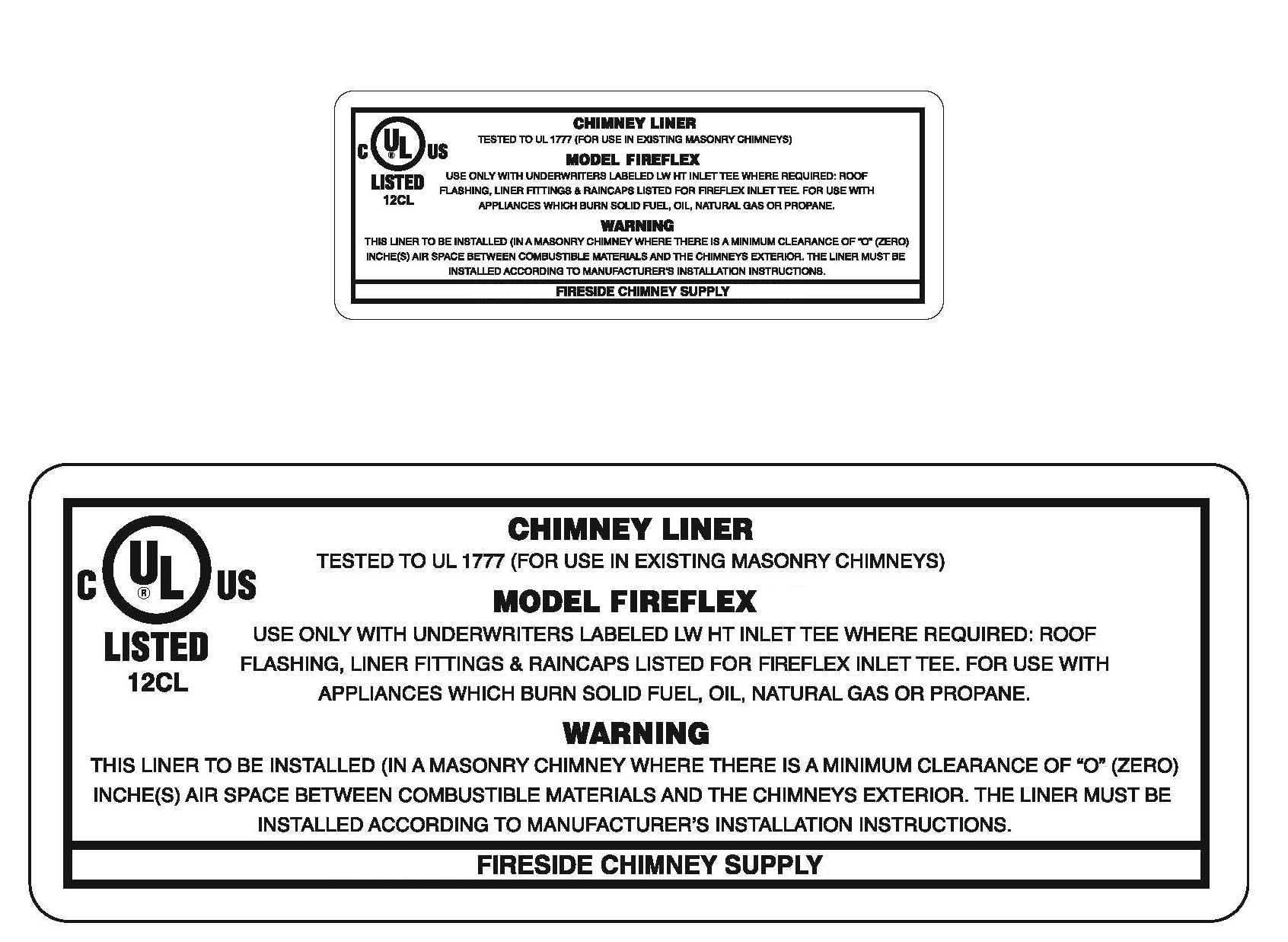
Others may claim their chimney liners are UL listed. We show you the proof.


Open Weekdays
Monday - Friday 9am - 5pm
Saturday Closed
Sunday Closed
1-877-486-8119